Tympanosclerosis is a condition that affects the middle ear and eardrum, leading to hearing-related problems in some individuals. Although it is not always serious, tympanosclerosis can cause noticeable hearing loss when it becomes extensive. Many people are unaware of this condition until it is detected during an ear examination or when hearing difficulties begin to interfere with daily life.
In this detailed guide, we will explain what tympanosclerosis is, its causes, symptoms, diagnosis, treatment options, and prevention strategies, helping you understand when medical care is necessary and what outcomes to expect.
What Is Tympanosclerosis?
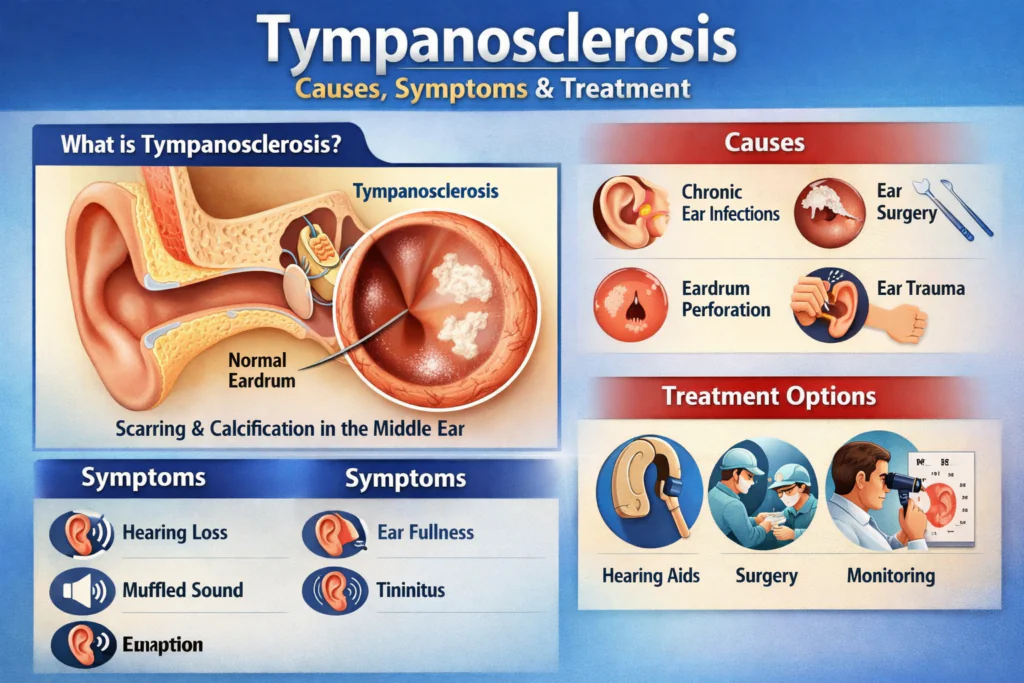
Tympanosclerosis is a medical condition characterized by scarring and calcification of tissues in the middle ear, particularly the tympanic membrane (eardrum). The term comes from:
- Tympano – relating to the eardrum
- Sclerosis – meaning hardening or stiffening
In tympanosclerosis, calcium deposits form in the eardrum or middle ear structures, making them thicker and less flexible. This stiffness can interfere with the normal vibration of the eardrum and ossicles (tiny hearing bones), potentially leading to hearing loss.
Tympanosclerosis vs Myringosclerosis
Although often used interchangeably, these terms are slightly different:
- Myringosclerosis: Calcification limited to the eardrum only
- Tympanosclerosis: Involves the eardrum and/or middle ear structures such as the ossicles
Myringosclerosis is more common and usually harmless, while tympanosclerosis involving the ossicles is more likely to affect hearing.
Causes of Tympanosclerosis
Tympanosclerosis typically develops as a long-term consequence of inflammation or injury to the middle ear. Common causes include:
1. Chronic Middle Ear Infections
Repeated or long-standing ear infections (chronic otitis media) are the most common cause. Persistent inflammation can damage ear tissues, leading to scarring and calcium buildup.
2. Ear Surgery
Procedures such as:
- Tympanostomy tube (grommet) insertion
- Eardrum repair (tympanoplasty)
can sometimes result in tympanosclerosis as part of the healing process.
3. Recurrent Ear Trauma
Repeated pressure changes, injuries, or untreated infections may increase the risk of tissue damage and scarring.
4. Eardrum Perforation
When the eardrum is perforated and later heals, scarring and calcification can occur, especially if healing is prolonged.
5. Poor Eustachian Tube Function
Improper ventilation of the middle ear can contribute to chronic inflammation and fluid retention, increasing the risk of tympanosclerosis.
Risk Factors
Certain individuals are more prone to developing tympanosclerosis, including:
- Children with frequent ear infections
- Adults with a history of chronic otitis media
- Patients who had ear tubes in childhood
- People with long-standing untreated ear conditions
Symptoms of Tympanosclerosis
Many people with tympanosclerosis do not experience symptoms, especially if the calcification is mild or limited to the eardrum. When symptoms occur, they may include:
1. Hearing Loss
- Usually conductive hearing loss
- May be mild to moderate
- Often affects one ear but can involve both
2. Ear Fullness or Pressure
Some patients report a blocked or heavy feeling in the ear.
3. Reduced Sound Clarity
Sounds may feel muffled or unclear, especially speech.
4. Tinnitus (Rare)
Occasional ringing or buzzing in the ear may occur, though this is not common.
Pain and discharge are usually absent, which helps distinguish tympanosclerosis from active ear infections.
How Tympanosclerosis Affects Hearing
Normal hearing depends on the free movement of:
- The eardrum
- Ossicles (malleus, incus, stapes)
In tympanosclerosis:
- Calcified plaques stiffen the eardrum
- Ossicles may become fixed or less mobile
This reduces sound transmission to the inner ear, resulting in conductive hearing loss. If the inner ear is unaffected, hearing loss is usually manageable.
Diagnosis of Tympanosclerosis
Diagnosis is typically made by an ENT (ear, nose, and throat) specialist using the following methods:
1. Otoscopic Examination
The doctor may observe:
- White, chalky patches on the eardrum
- Thickened or opaque tympanic membrane
2. Hearing Tests (Audiometry)
Pure-tone audiometry helps determine:
- Degree of hearing loss
- Type of hearing loss (conductive vs sensorineural)
3. Tympanometry
This test evaluates eardrum movement and middle ear pressure, often showing reduced mobility.
4. CT Scan (In Selected Cases)
Imaging may be used if ossicular involvement or surgical planning is required.
Treatment Options for Tympanosclerosis
Treatment depends on severity and symptoms. Not all cases require medical intervention.
1. Observation and Monitoring
If:
- Hearing is normal or minimally affected
- No discomfort is present
Then no treatment is needed. Regular check-ups may be advised.
2. Hearing Aids
For patients with hearing loss who are not surgical candidates or prefer non-surgical management:
- Hearing aids can significantly improve hearing
- Especially effective for conductive hearing loss
3. Surgical Treatment
Surgery is considered when tympanosclerosis causes significant hearing impairment.
Common Surgical Options:
- Tympanoplasty: Repair of the eardrum
- Ossiculoplasty: Reconstruction or replacement of ossicles
Surgery aims to:
- Remove calcified plaques
- Restore sound conduction
Surgical outcomes vary and depend on:
- Extent of calcification
- Middle ear health
- Surgeon expertise
4. Post-Surgical Rehabilitation
After surgery:
- Hearing tests are repeated
- Hearing aids may still be required in some cases
Can Tympanosclerosis Be Reversed?
Tympanosclerosis cannot be reversed naturally. Once calcification forms, it does not dissolve on its own. However:
- Progression may stop
- Hearing loss can be managed effectively with treatment
Early diagnosis improves outcomes.
Complications of Tympanosclerosis
Although usually benign, untreated severe cases may lead to:
- Permanent conductive hearing loss
- Reduced quality of life
- Difficulty understanding speech
Fortunately, serious complications are rare.
Prevention of Tympanosclerosis
While not all cases can be prevented, the risk can be reduced by:
- Treating ear infections promptly
- Completing prescribed medications
- Avoiding unnecessary ear trauma
- Regular hearing evaluations for children with recurrent infections
- Proper follow-up after ear surgery
Good ear care plays a crucial role in long-term ear health.
Tympanosclerosis in Children vs Adults
In Children:
- Often related to recurrent ear infections or ear tubes
- Usually mild and asymptomatic
- Hearing should be monitored during development
In Adults:
- May present with noticeable hearing loss
- Often linked to childhood ear disease
- More likely to require intervention if ossicles are involved
When to See a Doctor
Consult an ENT specialist if you experience:
- Persistent hearing loss
- History of repeated ear infections
- Ear fullness without pain
- Speech understanding difficulties
Early evaluation helps prevent long-term hearing problems.
Prognosis and Outlook
The outlook for tympanosclerosis is generally very good:
- Many cases remain stable and harmless
- Hearing loss, if present, is often manageable
- Modern hearing aids and surgical techniques provide effective solutions
With appropriate care, most people lead a normal life without significant limitations.